
Neurobiology Validates the Power of Psychodrama
Neurobiology validates the power of psychodrama
by Karen Carnabucci, MSS, LCSW, TEP
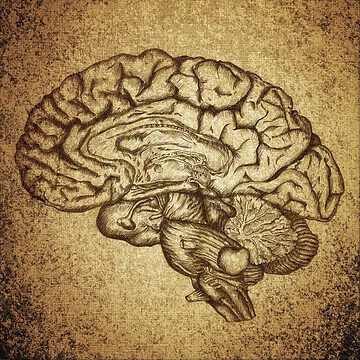
In the past two decades researchers have discovered a tremendous amount of information about the human brain. As we learn these startling new details, we are forced to discard old assumptions about how the brain works.
We now know about the delicate nature of the developing brain from the very beginning of life. Certain experiences – a stressed mother, a community trauma, a family crisis – appear to inhibit the circuitry of brain development even before the child’s birth.Yet the brain is not “fixed” to any specific configuration for life. For instance, we now understand that the brain is “plastic,” continuing to constantly change, alter and adapt as it responds to new life experiences.“In the past two decades researchers have discovered a tremendous amount of information about the human brain.”This information has great import for practitioners of and participants in psychodrama and its related sister field, known as sociometry, the later which is the study and application of action methods to explore relationships in action. Other creative arts therapists and experiential therapists are finding that their approaches impact personal neurobiology as well.
The brain is a social organ that is constructed through experience and connection. Experience changes not only the brain’s physical structure, called anatomy, but also functional organization, called physiology. We learn that the brain does not distinguish between experiences of daily life and experiences that are structured within the psychodrama treatment room, classroom or other protected setting.Leading researchers agree that healthy brain development is linked to relationships with others that are companioning, caring and empathetic. Researchers are teasing out the components of what creates positive change within the brain, even when the brain’s development has been hindered, and we now have an understanding of certain conditions that promote optimal reconfiguration.Daniel Siegel, the physician and author of Mindsight, The Developing Mind and Pocket Guide to Interpersonal Neurobiology: An Integrative Handbook of the Mind, has coined the phrase of “interpersonal neurobiology.” Interpersonal neurobiology suggests that social relationships shape how our brains develop. Certain kinds of attuned and empathetic relationships promote important connections within the brain and being that create resilience, compassion and well being in our behavior and relationships.
Play is essential. Steven Porges, author of The Polyvagal Theory: Neurophysiological Foundations of Emotions, Attachment, Communication, and Self-Regulation, says play with others reroutes our automatic defensive responses because it includes face-to-face social engagement with an expressive face and wide-open eyes.When psychological trauma is added to the mix, brains demand specific attention. Dr. Bessel van der Kolk, the psychiatrist who has studied Post-Traumatic Stress Disorder since the 1970s, has suggested that improvisation, theatre and other experiential methods are superior to traditional talk therapy.He repeatedly cites the importance of meaningful physical action to loosen the trauma sensations that have been “stuck” in the brain’s nonverbal and non-conscious subcortical regions – where they’re not accessible to the understanding, thinking and reasoning parts of the brain. The title of one of his books, The Body Keeps the Score, echoes the oft-quoted statement by Dr. J.L. Moreno, developer of psychodrama, who said, “The body remembers what the mind forgets.”
As science brings mind, brain, and body together in the human organism, we see “why” change and healing happens with action. Dr. Moreno’s sociometric activities help people build relational connections, which are reinforced during psychodramatic sessions. And because so much of psychodrama involves play, improvisation and experimentation, it is ideal to gradually take people from a frozen state to a regulated nervous system.“Play is essential.”It appears that neuroscience is validating what psychodramatists have intuitively understood – that psychodrama, role play, sociometric activities and experiential therapies reach deep into the weave of the brain and the body to transform consciousness. The multi-sensory aspects of the method are friendly to the brain, and psychodramatists can create safe experiences that alter the neurobiology of their clients and make lasting changes in their lives.Truly, experience is what makes the difference. As Siegel says, “A wide array of research reveals that the more you can become aware of your body’s sensations and stay present with them – not running from them – the more compassion you’ll be able to develop for yourself, and for others.”
Originally published at: http://healing-bridges.com/ December 21, 2018
Karen Carnabucci, MSS, LCSW, TEP offers alternative psychotherapy, training & classes in Lancaster, PA, and is the author of “Show and Tell Psychodrama”, “Healing Eating Disorders with Psychodrama” and “Integrating Psychodrama and Systemic Constellation”.