
In the Courtroom, Psychodrama as a Path to Understanding Others
In the Courtroom, Psychodrama as a Path to Understanding Others
Leigh E. Johnson, J.D., PAT
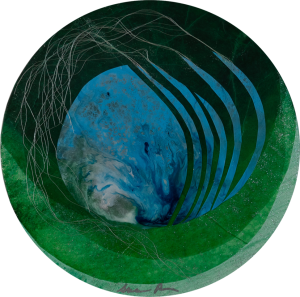
“The more you know yourself, the more patience you have for what you see in others.” – Erik Erikson
The courtroom, the clinic, the classroom, the home—these are all arenas where we confront others’ behaviors. And in each of these settings, the ease or difficulty we experience in meeting those behaviors with compassion is almost always shaped by one hidden factor: how deeply we know ourselves.
This quote by Erik Erikson, the fabled child psychoanalyst, is not merely a poetic observation—it is a clinical and sociometric truth. When we are unfamiliar with our own roles, reactions and unfinished stories, we are far more likely to judge others harshly or be triggered by their behavior. When we come to recognize our own fears, longings, and contradictions, we begin to understand that what disturbs us in others is often what is unexamined in ourselves.
Dr. J.L. Moreno, the originator of the method of psychodrama, taught us that truth emerges through action—and in that action, we discover ourselves in relation to others.
In psychodrama, we do not observe life from a distance. We step into roles, we reverse them, and we witness ourselves. The more we do this work, the more we begin to see that what we criticize in others may be a disowned part of our own inner ensemble. That client who won’t speak up? Perhaps she echoes our silenced younger self. The opposing counsel who postures with arrogance? Perhaps he wears the armor we once needed to survive. When we know our roles—especially the split ones, the silenced ones—we meet others with greater spaciousness and less reactivity.
In my book, “Building The Case,” we teach that your ability to tell another person’s story with empathy is tied directly to how honestly you’ve explored your own. We are not simply shaping narratives—we are becoming the kind of narrator that the story requires: grounded, clear, aware of what belongs to us and what belongs to the other.
This is where Moreno’s role theory and sociometry meet courtroom storytelling. We use tools not just to decode another person’s life but to locate our own position in it. We ask: What role am I in right now? What part of me is reacting? Where am I in the social atom of this story?
Self-knowledge is not navel-gazing. It is preparation. We do not seek to master techniques alone—we seek to master the terrain of the self so that our advocacy comes from integration, not projection. When you’ve confronted your own despair, your own shame, your own fight to be seen—you stop being surprised or offended when you see it in someone else. Instead, you get curious. You hold the silence a beat longer. You make space for the real story to emerge. And that pause, that patience, is often the difference between a courtroom performance and a moment of truth.
In this article, we explore how to develop that inner knowing—not just for our own benefit, but as a radical act of preparation for holding the stories of others. We will use Moreno’s tools, the framework of “Building the Case” that I designed as an attorney, and role theory to turn the mirror inward before we try to hold it up to someone else.
Because in the end, as Erikson reminds us, patience is not the result of willpower—it is the natural outgrowth of self-revelation.
The 5 W’s
Who
The who in this lesson is the advocate, the lawyer, the teacher, or the helper who is asked to hold the complexity of another person’s life in their hands. Whether it’s a courtroom or a case conference, the person who steps forward to speak on behalf of someone else must also be willing to confront what that story evokes in themselves. This article is for the storyteller who does more than recite facts—it’s for the one who bears witness. And in order to witness well, they must know who they are beyond the roles they perform.
What
The what is deceptively simple: patience. But not the kind of patience that is forced or practiced only through effort. This is the patience that arises naturally when you no longer see others as “other.” When you understand your own defenses, pain, and survival strategies, what once appeared as baffling or irritating in another becomes legible. Their reactions no longer threaten your control or your sense of identity. You recognize in them a version of yourself. That recognition births patience—the kind that makes room for truth to surface.
When
The when of this process usually comes at the breaking point. It arises when we find ourselves deeply reactive, judgmental, or emotionally flooded in response to someone else’s behavior. It might be during a client interview, while prepping a witness, or when feeling emotionally hijacked in court. The moment we feel frustrated with someone else’s silence, hostility, or chaos is the moment we are most likely to be confronted with an opportunity for self-revelation. It is not the easiest time to turn inward—but it is the most fruitful.
Where
The where this transformation takes place is both within and between. Internally, it happens in the chambers of reflection, journaling, and therapeutic self-discovery. Interpersonally, it unfolds in warm-up circles, role plays, consultations, and real-time psychodramatic work. In Building the Case, we deliberately create space—whether in Zoom rooms or training retreats—where advocates can locate themselves within the action. The “where” is wherever we dare to pause and notice that our reaction to others is shaped by the roles and rules we’ve internalized.
Why
The why is the ethical spine of this article. Because when we don’t know ourselves, we distort the stories we are trying to tell. We rush, blame, or manipulate the moment instead of holding it open. We confuse projection with perception.
But when we’ve mapped our own roles with honesty—especially the parts we’ve disowned—we bring humility and grace into the storytelling process. We stop trying to fix others or make them perform. Instead, we sit beside them, offering the kind of witnessing we once needed ourselves. This is why we do the inner work. Not just to become better advocates—but to become braver, more patient humans.
Building The Case Story Spine: “Patience Through the Mirror”
Once upon a time, there was a skilled advocate who dedicated their life to telling other people’s stories—clients, communities, and those who had been hurt or silenced.
And every day, they showed up prepared, professional, and determined to speak truth to power—but found themselves growing impatient and reactive when others did not act, speak, or feel the way they expected.
Until one day, they realized that their frustration wasn’t just about the other person—it was a reflection of unexamined parts of themselves. Their judgment came from a place in them that was still unresolved, unspoken, or afraid.
Because of that, they began to turn inward. They practiced role reversal, mapped their disowned roles, and explored the inner ensemble behind their reactions. They used psychodrama and Moreno’s methods to step into their own silence, grief and defense mechanisms.
Because of that, they gained new insight. They no longer mistook emotional distance for strength or silence for defiance. Instead, they saw each client and colleague as a mirror—not a threat. Their storytelling changed. Their listening deepened. Their patience became natural.
Until finally, they were able to meet others not from a place of control or performance, but from a place of presence. And in that space, the truth had room to breathe. Advocacy became more than persuasion—it became healing.
And ever since that day, they understood that knowing themselves was not just personal growth. It was professional integrity. It was ethical preparation. And it was the only way to build the case with clarity, compassion, and courage.
Closing principle
The courtroom is a mirror. Advocacy is a mirror. Every act of storytelling places us in proximity to the lives of others—but we can only meet them with clarity and care when we’ve done the work of meeting ourselves first. Self-knowledge is not a private luxury—it is the foundation of ethical, accurate, and humane representation. “Building the Case” teaches us that before we build the case, we must build the capacity. The more we know ourselves, the more we can stand steady in the storm of another person’s truth—and that, in the end, is the mark of a powerful advocate.
Leigh E. Johnson, J.D., PAT, is certified as a Psychodrama Practitioner by the American Board of Examiners in Psychodrama, Sociometry and Group Psychotherapy. She is a trial lawyer and founder of Trial Whisperer, Law Focus Groups, and Lawyers and Leaders.
Artwork by Susan Aaron.