
ENACTING TRANSFORMATION WITH FAIRYTALES AND MYTHS:
Harnessing the Power of Story for Healing and Development in Groups Across the Life Span
With Rebecca Walters, MS, LMHC, LCAT, TEP
May 2-3, 2026
Saturday 1-6:30 PM– Sunday 9- 5:00 PM
Location: Boughton Place, Highland, NY
Home of the original Moreno Psychodrama Stage
Overnight accommodations are available on site and nearby.

Learn How To:
• Choose the right story for the right time
Trainer
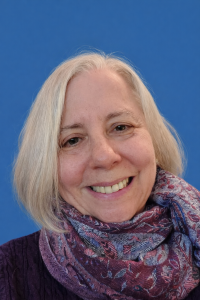 Rebecca Walters, MS, LMHC, LCAT, TEP is Director of the Hudson Valley Psychodrama Institute in New York which she founded 1989. She was the Director of Child and Adolescent Psychodrama Services at Four Winds Psychiatric Hospital, New York where she ran psychodrama groups on inpatient and outpatient child, adolescent and adult units. Rebecca is a Fellow of the ASGPP and was the recipient of their 2018 JL Moreno Award for lifetime achievement in the field. With over 40 years of experience, Rebecca is an internationally respected trainer in the use of psychodrama and sociodrama with children, adolescents, substance abusers, trauma survivors and in teaching communication skills.
Read more here.

Registration Information and Payment
Cost: $385 if registered by March 21st/ $440 after
Secure payment via PayPal

For more information and to register, please contact meghan@hvpi.net
Refund and Cancellation Policy
Learning Objectives
1. Differentiate between psychodrama and sociodrama, including their respective goals, methods, and appropriate contexts for use.
2. Identify the therapeutic benefits of story enactment.
3. Identify and select age-appropriate stories taking into account developmental levels, group goals and individual needs.
4. Develop skills in using vocal expression and movement to engage group members and facilitate active participation in story enactment.
5. Develop and practice skills as a facilitator of enactments.
6. Facilitate Safe Expressive Work and Role Training.
7. Describe how metaphor and symbolic storytelling create a safe psychological distance supporting emotional regulation and keeping within the Window of Tolerance.
8. Describe the value of oral storytelling, including traditional tales and folklore, and distinguish these from written stories.
9. Explain the value of repetition in stories, especially for younger children or those with cognitive challenges, to foster predictability, reassurance, and mastery.

**12 Continuing Education Hours
NYS Social Workers: In collaboration with Jacob Gershoni, LCSW, SW, CPE.
NYS LCAT’s: In collaboration with Water & Stone, a Creative Arts Therapy PLLC.
NBCC (National Board of Certified Counselors): Hudson Valley Psychodrama, LLC has been approved by NBCC as an Approved Continuing Education Provider, ACEP #6789.
Programs that do not qualify for NBCC credit are clearly identified. Hudson Valley Psychodrama, LLC is solely responsible for all aspects of the programs. This course is approved for 12 CE’s.
**Many states accept NBCC and/or NYS Continuing Education for Mental Health professionals and Substance Abuse counsellors. Check with your state licensing board.
This workshop offers 12 training hours towards certification by the American board of Examiners in Psychodrama, Sociometry and Group Psychotherapy.
For more information regarding Continuing Education hours please contact us.