
Creative Arts Therapy and Psychodrama: Pathways to Healing and Transformation
Creative Arts Therapy and
Psychodrama: Pathways to Healing
and Transformation
Rebecca Walters MS, LCAT TEP
The creative arts have long served as powerful channels for human expression, healing, and connection. In the realm of mental health and therapy, the blending of artistry and psychology has given rise to creative arts therapies—modalities that use visual art, drama, music, dance, and other expressive forms to foster emotional well-being. Creative arts therapy and psychodrama stand at the vibrant crossroads of psychology and the arts, drawing upon human creativity as a wellspring for healing, growth, and transformation. Both approaches invite individuals to explore their inner worlds, confront challenges, and rehearse new ways of being through expressive modalities that transcend the limitations of traditional talk therapy. This document delves into the histories, methodologies, and profound benefits of creative arts therapy and psychodrama, illuminating their unique yet complementary roles in the landscape of therapeutic practice.
Understanding Creative Arts Therapy
Creative arts therapy is an umbrella term describing a range of therapeutic disciplines that use the arts as tools for self-expression and psychological healing. These disciplines include art therapy, music therapy, dance/movement therapy, drama therapy, and poetry/bibliotherapy among others. What unites them is the conviction that the act of creating—whether through images, sounds, movement, writing, storytelling or dramatic action—can catalyze insight, release emotion, and foster change.
Roots and Development
The roots of creative arts therapy can be traced to ancient rituals and communal practices, where art, music, dance and drama were integral to healing ceremonies. However, as a formalized practice, creative arts therapy emerged in the 20th century alongside developments in psychology and the recognition of the arts as vehicles for communication and transformation. Figures such as Margaret Naumburg in art therapy and Marian Chace in dance therapy were just a few of the early pioneers who developed methods that integrated artistic processes with psychotherapeutic goals.
Core Principles and Modalities
Creative arts therapists are trained professionals who facilitate the use of expressive arts to help clients:
• Communicate thoughts and feelings that may be difficult to articulate verbally
• Access unconscious material and process trauma in a safe, symbolic way
• Experiment with identity and self-concept through creative exploration
• Develop coping skills and resilience
• Enhance social connection and empathy
Typical interventions include:
• Art Therapy: Utilizing drawing, painting, sculpture, and other visual arts to externalize inner experience. The creative process, not the aesthetic product, is the focus.
• Music Therapy: Harnessing the power of rhythm, melody, and harmony for emotional regulation, memory recall, and relationship-building. Techniques may include improvisation, songwriting, and receptive listening.
• Dance/Movement Therapy: Emphasizing the mind-body connection, this modality explores movement as a language of emotion and a means of integration.
• Drama Therapy: Engaging in role-play, improvisation, and storytelling to rehearse alternative perspectives and solutions to life’s challenges.
• Poetry/Bibliotherapy: Using literature and the written word to give voice to internal narratives and foster meaning-making.
Applications and Populations
Creative arts therapies have been effectively applied in a variety of settings, including hospitals, schools, rehabilitation centers, community clinics, and private practice. Populations served span all ages and backgrounds: children coping with trauma, adults living with mental illness, elders facing dementia, people undergoing medical treatment, and those seeking personal growth or stress relief.
Psychodrama as a Creative Arts Therapy
Psychodrama stands at the intersection of theatre and psychotherapy. Its core techniques—role reversal, doubling, and mirroring—draw from the dramatic arts to enable participants to explore internal conflicts, relationships, and new possibilities and develop more spontaneity in the many roles in their lives.
Historical Context
Moreno’s work was revolutionary in its assertion that action—rather than intellect alone—could lead to profound healing. He believed that by re-enacting scenes from the past, envisioning the future, or experimenting with alternative roles, individuals could break free from repetitive patterns and move toward psychological integration. He believed that it is through the creativity and spontaneity people and communities would heal. In 1942 Moreno founded the American Society of Group Psychotherapy and Psychodrama whose annual conferences has brought together leaders and practitioners in the fields of Creative Arts Therapy, Group Therapy and Psychodrama.
The Structure of a Psychodrama Session
A typical psychodrama session unfolds in three phases:
• Warm-up: Group members engage in activities to uncover and create connections, build trust, stimulate creativity and spontaneity and identify themes for exploration.
• Action: One participant, the “protagonist,” steps forward to enact a scene from their life, a challenge, or a wish. Other group members may take on roles of significant others, inner voices, parts of the self, different emotions, the protagonist at different ages or/or objects within the scene, guided by the “director” (therapist).
• Sharing: The group reconvenes to process the experience, share personal reactions, and integrate learning without feedback or analysis of the protagonist.
Key Techniques
Psychodrama employs a rich toolbox of techniques, including:
• Role Reversal: Participants exchange roles to gain insight into the other’s perspective, fostering empathy and understanding.
• Doubling: Another group member stands beside the protagonist, providing support, helping to externalize the protagonist’s inner experience, voicing thoughts or feelings that may be unspoken, and encouraging the protagonist’s awareness, insight and expression.
• Mirroring: The protagonist stands outside the scene, observing their own behavior as enacted by another, offering a new vantage point on the personal patterns and dynamics.
• Soliloquy: With the action paused, the protagonist speaks their inner thoughts aloud, to promote awareness, create clarity and offer opportunities for catharsis.
• Future Projection: Envisioning and dramatizing possible future scenarios, allowing rehearsal of new strategies or outcomes.
These techniques are not only therapeutic but inherently creative, inviting spontaneity, imagination, and the co-creation of meaning—a hallmark of creative arts therapy.
Therapeutic Benefits
• Empowerment through active participation in one’s own healing process
• Increased spontaneity and creativity in facing life’s challenges
• Resolution of internal conflicts and unexpressed emotions
• Deeper empathy and improved relationships with others
• Opportunities for catharsis and integration of difficult experiences
Creative Arts Therapy and Psychodrama: Points of Intersection
While each modality has distinct features, creative arts therapy and psychodrama share a foundation in experiential techniques—meaning that clients learn and heal through doing, not just talking. Both approaches are grounded in the belief that creativity is inherent to all humans and that expressive action can unlock new possibilities even when words are insufficient.
In clinical practice, therapists often blend elements of creative arts therapy and psychodrama, inviting clients to draw, move, sing, or enact scenes as part of the therapeutic process. For example, drama therapists may incorporate psychodramatic techniques such as role reversal and doubling, art therapists may encourage the physical embodiment of a piece of artwork and interaction with various parts of it, music therapists may suggest the client express in sound, rhythm or song what they have previously been unable to express to significant others.
Psychodramatists may integrate any of the creative arts therapies to deepen emotional expression and awareness during any phase of a psychodrama session: warm up, action and sharing.
Case Examples:
A group of adults processing grief in a creative arts therapy group might paint images representing who or what they lost. They could compose music individually or together to honor their loved ones or to express their grief. They might write poetry or choreograph movement to express the depth of their grief. In a psychodrama session, a participant might re enact a farewell conversation or embody their loss as a character, with the support of group members playing significant roles. They might integrate artwork, poetry, dance or music from either earlier in the session or create something a new, to communicate the essence of their experience. The combination of these expressive tools enables participants to access emotions, gain perspective, and rehearse steps toward healing.
A group of teenagers in an inpatient psychodrama group: using poetry and/or percussion instruments to express their anger at authority before practicing how to speak to authority without getting into trouble.
Groups of refugees in both a school group and a community group used art material to create what they missed about their home country and write poetry to ‘speak” to that which they left, co-creating scenes from their home country and giving voice through music and movement to their grief. They created psychodramatic scenes of hope for the future. And they used ritual drama to bring some of what they left behind into their current home.
A psychodrama group created paintings/sculptures out of fabric and found objects to represent their journey through recent time which was a warmup into personal psychodramas. At the end of the session each could share their personal reflections through creating new sculptures, poetry and musical expression.
A personal growth group used movement, art materials and drama to explore constricted and expansive roles as part of the psychodramas they enacted.
Research and Efficacy
Research supports the effectiveness of both creative arts therapy and psychodrama in promoting emotional well-being, reducing symptoms of depression, anxiety, and trauma, and improving social functioning. Neurobiological studies suggest that engaging in creative action can modulate stress, enhance brain plasticity, and foster resilience.
Training and Ethical Practice
Practitioners of creative arts therapy and psychodrama undergo specialized training and must adhere to ethical guidelines established by their respective professional organizations, such as the American Art Therapy Association (AATA), the North American Association for Drama Therapy (NADTA), National Association of Dance Therapy (NADT) or the American Board of Examiners in Psychodrama, Sociometry and Group Psychotherapy (ABE). Core competencies include clinical assessment, intervention, cultural humility, and a commitment to ongoing professional development. In addition, the American Society of Psychodrama, Sociometry and Group Psychotherapy (ASGPP) is a member organization that puts on annual in person conferences and online symposia that includes workshops that integrate the creative arts therapies.
Conclusion: Creativity as a Force for Change
Creative arts therapy and psychodrama are powerful companions on the journey toward healing. By engaging the body, imagination, and spirit, they invite us to rewrite our stories, discover new strengths, and build bridges between our inner and outer worlds. Whether through the stroke of a brush, the resonance of a drum, or the transformative magic of the stage, these therapies affirm the human capacity for renewal and connection.
As our understanding of mind-body integration deepens and the need for holistic approaches to well-being grows, creative arts therapy and psychodrama will continue to illuminate pathways of hope, resilience, and transformation for individuals and communities alike.
Rebecca Walters, MS (Expressive Therapies), TEP is a Licensed Creative Arts Therapist in NY and the founder and director of the Hudson Valley Psychodrama Institute which she co founded in 1989. Rebecca has utilized all modalities in her 45 years of individual and group work with children, adolescents and adults.
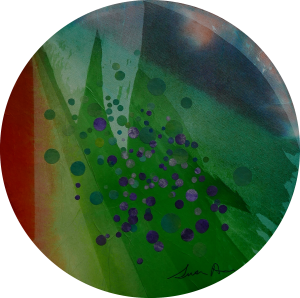
Artwork by Susan Aaron.